
Suburban Battery Setup
A complete residential energy storage deployment featuring automated transfer switching, multi-circuit protection, and sustained boiler operation for seasonal grid contingencies.
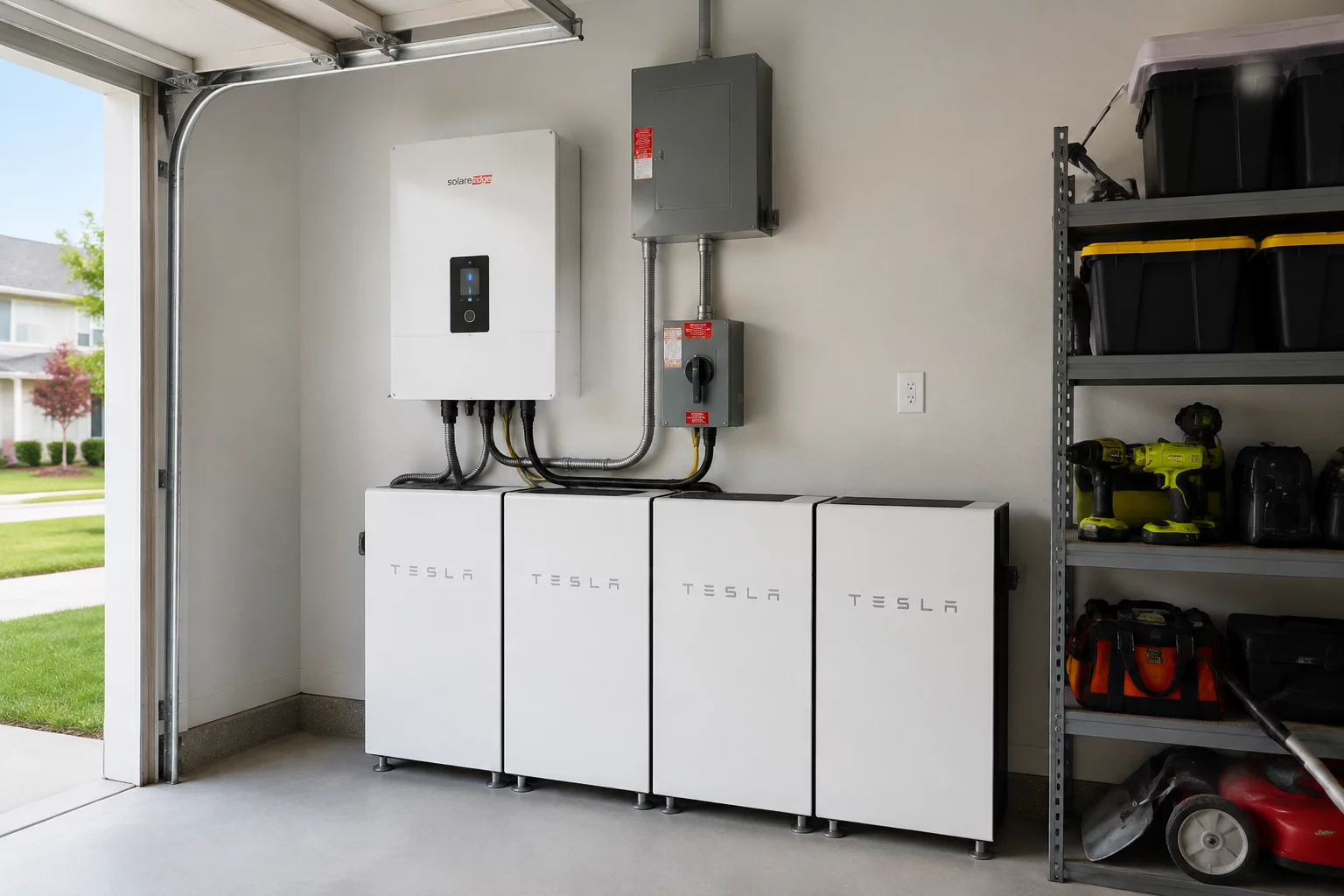
Project Overview & Engineering Specifications
The primary engineering objective for this suburban home was mitigating seasonal grid instability and recurring voltage sags that regularly triggered gas boiler safety shutdowns. We implemented a synchronized hybrid power architecture that continuously isolates high-priority circuits while maintaining battery readiness at full capacity. The intelligent energy controller manages grid electricity, cleans waveform disturbances, and routes stored power with zero perceived lag.
All mechanical integration was isolated to the utility area with fire-rated wall mounts and dedicated steel wireways. Line-interactive switching directs immediate battery power to heating circulation pumps, kitchen refrigeration, perimeter safety cameras, and main routing stations. Even in cold winter conditions, the household operates autonomously without manual breaker adjustments.
Hardware Configuration & System Diagnostics
- 5.0 kW pure sine wave inverter with integrated sub-15ms automated transfer switch.
- 10.2 kWh lithium iron phosphate (LiFePO4) storage modules with active cell balancing.
- Isolated emergency subpanel separating critical HVAC and refrigeration loops.
- Industrial-grade Class II surge suppression and external maintenance bypass switch.
Commissioning Verification
Full load testing verified that power transfers happen within 12 milliseconds under an intentional total blackout simulation. The heating boiler and water circulators experienced zero flame interruption or controller reset throughout the procedure.
Calculated Household Consumer Load
Active continuous telemetry reveals an average steady household draw of 480 watts across critical circuits, rising to 1.85 kW during simultaneous boiler pump activation and refrigerator compressor cycles.
Engineering Reviews & Inquiries
Verified LogsSubmit Technical Question or Feedback