
Winter Cabin UPS
Complete engineering review of an automated boiler backup power installation designed to protect water heating pipes and circulation pumps from deep freeze conditions during extended mountain grid outages.
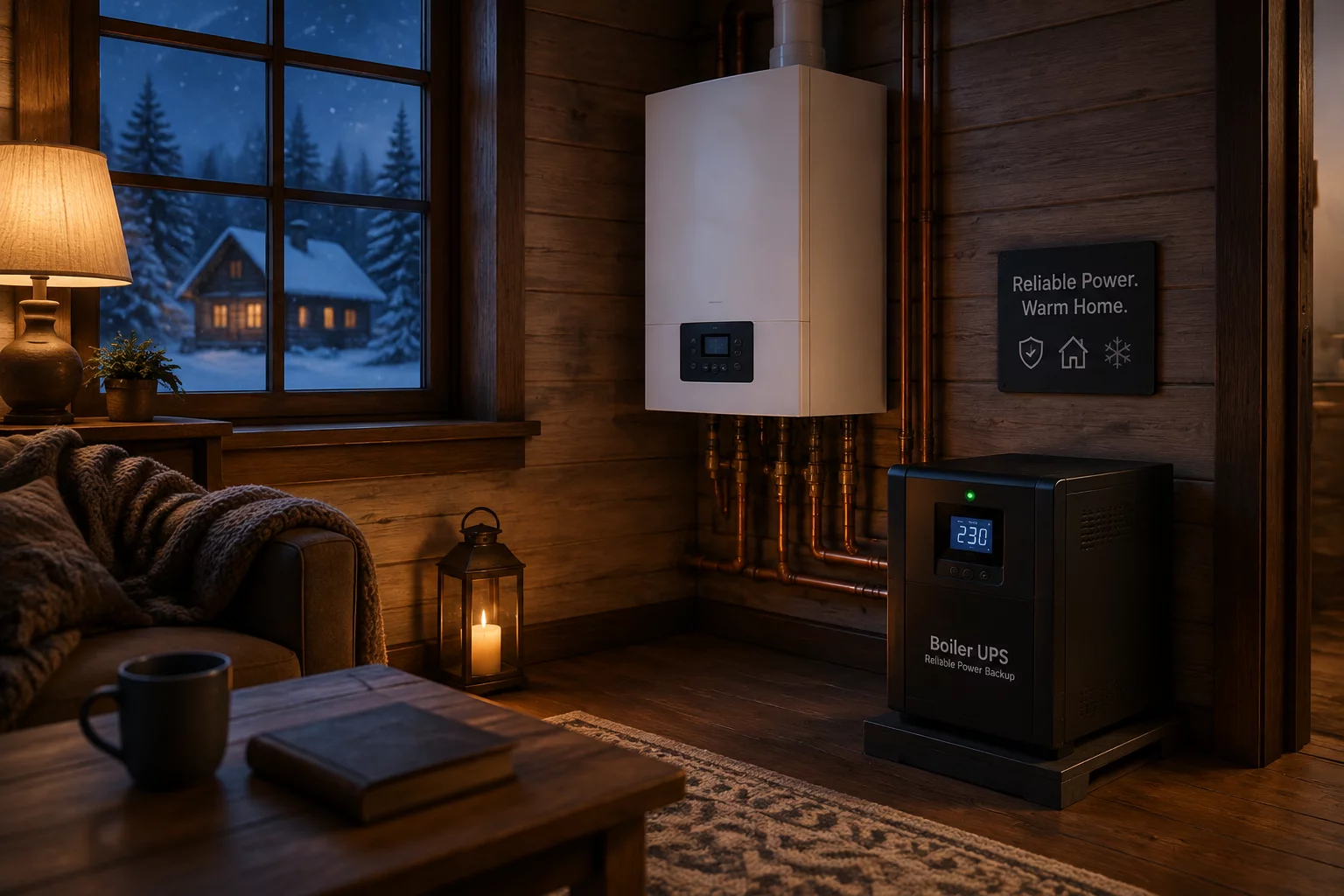
Project Overview & Engineering Specifications
High-altitude mountain cabins face unpredictable weather shifts and frequent power line disruptions throughout winter. For this remote timber structure, uninterrupted heating operation represents not merely personal comfort, but vital structural protection against pipe bursting and freeze expansion damage. Our engineering team deployed a pure sine wave uninterruptible power supply coupled with temperature-resilient lithium iron phosphate storage directly linked to the central pellet boiler and primary hydronic circulation loops.
The installation features automated line filtering to clean irregular grid voltages often recorded at end-of-line rural transformers. During testing, the transition from mains power to internal battery inverter occurred in under ten milliseconds, preventing burner lockout and pump turbulence. Smart telemetry continuously transmits battery temperature, load wattage, and ambient cellar readings to the homeowner dashboard, ensuring total operational visibility even during blizzard blackouts.
Hardware Configuration & System Diagnostics
- Pure sine wave line-interactive inverter providing clean 230V output to sensitive boiler control boards and pump motors.
- 4.8 kWh LiFePO4 battery pack with integrated active heating jackets maintaining cell efficiency in sub-zero environments.
- Fast automatic transfer switch executing power transitions in under 10ms with zero ignition interruption.
- Dual-tier surge protection module safeguarding microcircuits against winter storm line spikes and brownouts.
Commissioning Verification
Full load simulated blackout cycle completed over 24 continuous hours. The heating plant sustained consistent water circulation pressure with nominal cellar ambient temperatures at -8°C outside. Battery core temperatures remained steady at +18°C via internal thermal pads.
Calculated Household Consumer Load
The cabin backup topology isolates critical heating infrastructure and basic communication gear from high-draw comfort circuits. The pellet ignition sequence momentarily demands up to 320 watts before settling into a modest steady running draw of 180 watts across circulation pumps and exhaust fans. Secondary loads, including cellular booster modems and frost-protection heat tapes, draw approximately 65 watts collectively, maintaining complete environmental integrity for over 28 continuous operating hours without external intervention.
Engineering Reviews & Inquiries
0 ReviewsNo comments yet. Be the first to leave a review or technical inquiry.
Submit Technical Question or Feedback